Don’t let yourself be forgotten – holiday letters

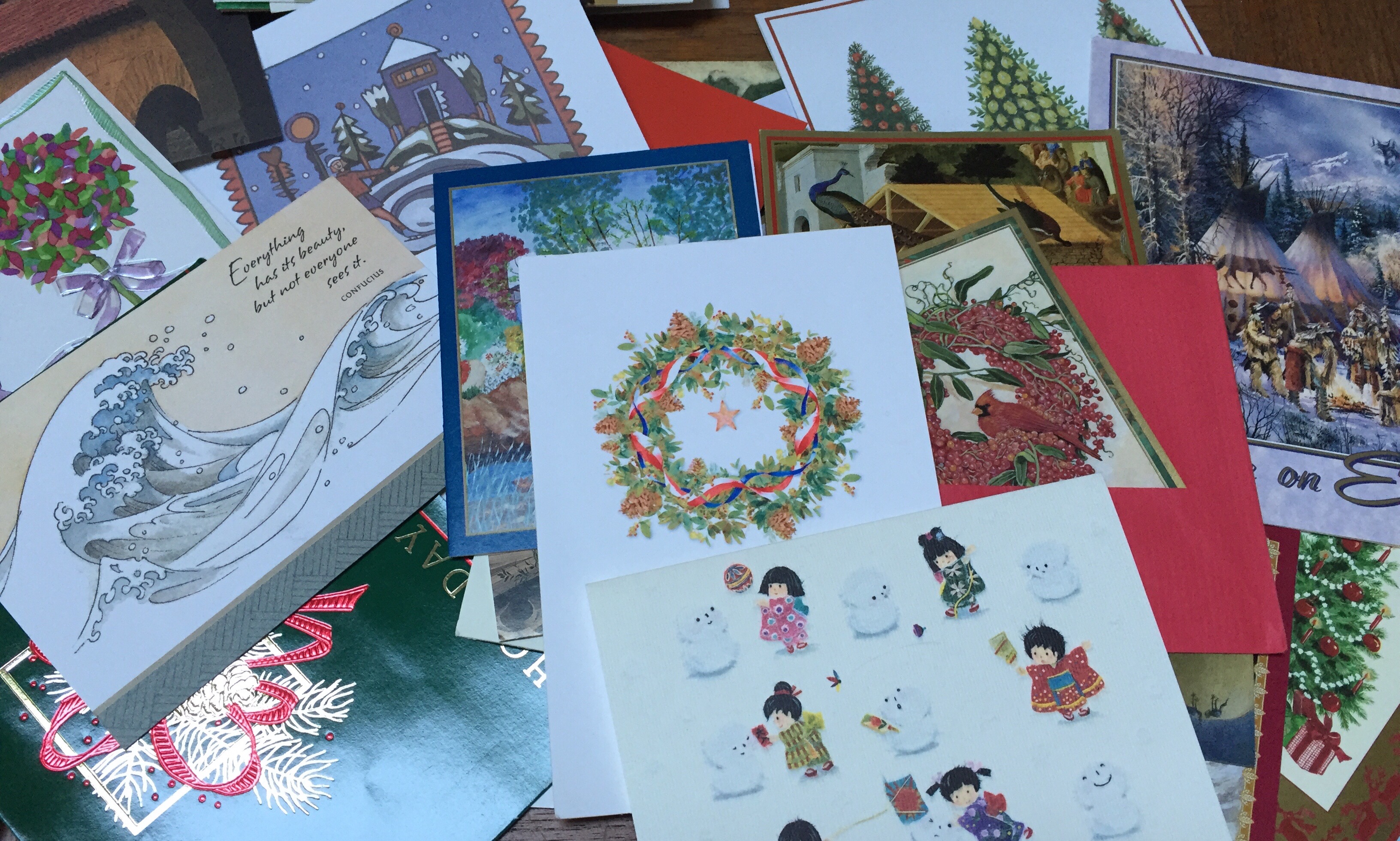
As we count down to the holiday season, I want to speak up for the Christmas (Hanukah, Solstice, choose-your-holiday) letter. You know what I mean: it’s that letter stuffed in an envelope that recounts what you did in the last year.

Christmas cards

Why are they important? Why not just follow people online? (Have you ever gone through a friend’s Facebook feed to see how their lives have been over a year? Really?) Why put your year down in print and tuck it in an envelope (which will cost $$) to send?

My reply? Letter by letter, decade by decade, holiday letters are snapshots of life of those important to you. For the closest friends and family, the stories end only with death.

When you are young, the letter is about what’s important to you. They’ll speak about having a family, a career or both.  Then as the young become the old, it’s about the next generation or retirement. It’s the passing of the torch.

If you’re writing the letter, it’s a way to look back, see what happened, where you went and what you experienced over a year.  Let’s be honest: what do you remember about January? The bills for holiday presents that no one remembers getting? February? March? April? If you asked a person in an increasingly complicated world, what do you remember about the first part of a year, what would they say? (They’d probably check their Facebook feed if they had time.)

Paring down your life to a snapshot letter helps you assess what was important in that year. Who and what is important enough to make the cut? Should the year be a chronology or by an event’s impact on you?

Once they are unfolded, the letters become part of the texture of other people’s lives.Their reaction is using joy – sometimes anger. That’s their problem though.

Most holiday letters are probably discarded. People toss them along with the cards and envelopes.

But if they’re kept, they become a snapshot of history.

Every history ends with unfinished stories. What happened to the friend of your parent who had cancer? Did the grandchild of another make it to the college of their choice? Did anyone finish writing their books? Your descendants will never know. The threads are broken.

So, write that paper letter and take the risk of being part of a history beyond your online identity. Your children, your grandchildren, archivists and historians will appreciate it.

Don’t let yourself be forgotten.

From a holiday note

From a holiday note


Posted in family, History | Tagged , , , , | Leave a comment

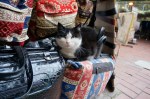
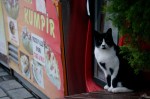
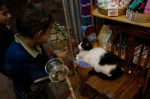
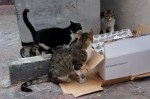
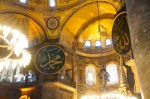
The Cats of Istanbul

Istanbul, Turkey, has a history that reaches back in time before the Roman Empire. It has two of the most beautiful buildings in the world: the Hagia (or Aya) Sophia and the Blue Mosque.

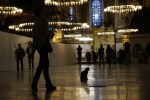
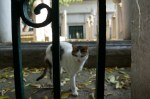
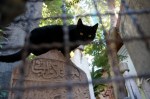
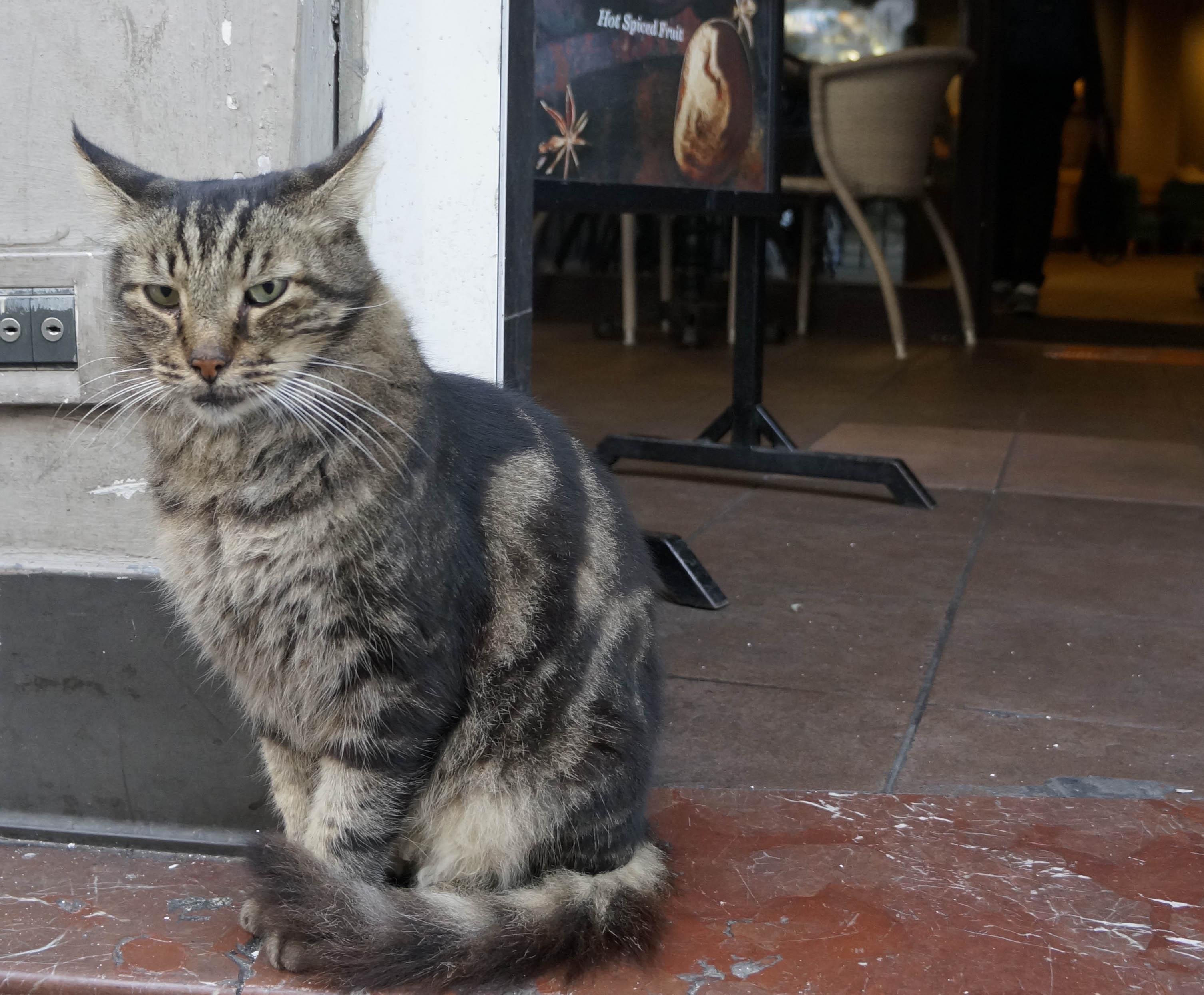
It also has cats. Many, many cats. (Slideshow – click on first image)

A cat outside of Starbucks on the Istiklal Caddesi

A cat outside of Starbucks on the Istiklal Caddesi


Posted in Uncategorized | Tagged , , | 9 Comments

Churning waves, fans, and even kitties at “Sotatsu: Making Waves”

You may have to search for them, but there are cats at D.C.’s Arthur M. Sackler’s new Asian art show, “Sotatsu: Making Waves.”

“Making Waves” is an extensive look at the work of Tawaraya Sotatsu, an artisan and craftsman who worked in Edo (Tokyo) from 1620 through 1640, a turbulent time in Japan’s history.

Dr. James Ulak, the Senior Curator of Japanese Art at the Freer Gallery of Art and Arthur M. Sackler Gallery, admits that there is “not a lot you can say about Sotatsu in way of biography.”

He emerges from obscurity in 1620 when he repairs a Buddhist Sutra scroll in Hiroshima. In Edo, he establishes his workshop, gains connections with the aristocracy and the Buddhist priests, and produces works of art that are now priceless. Then he fades away in the 1630s, leaving others to carry on, and follow, his work.

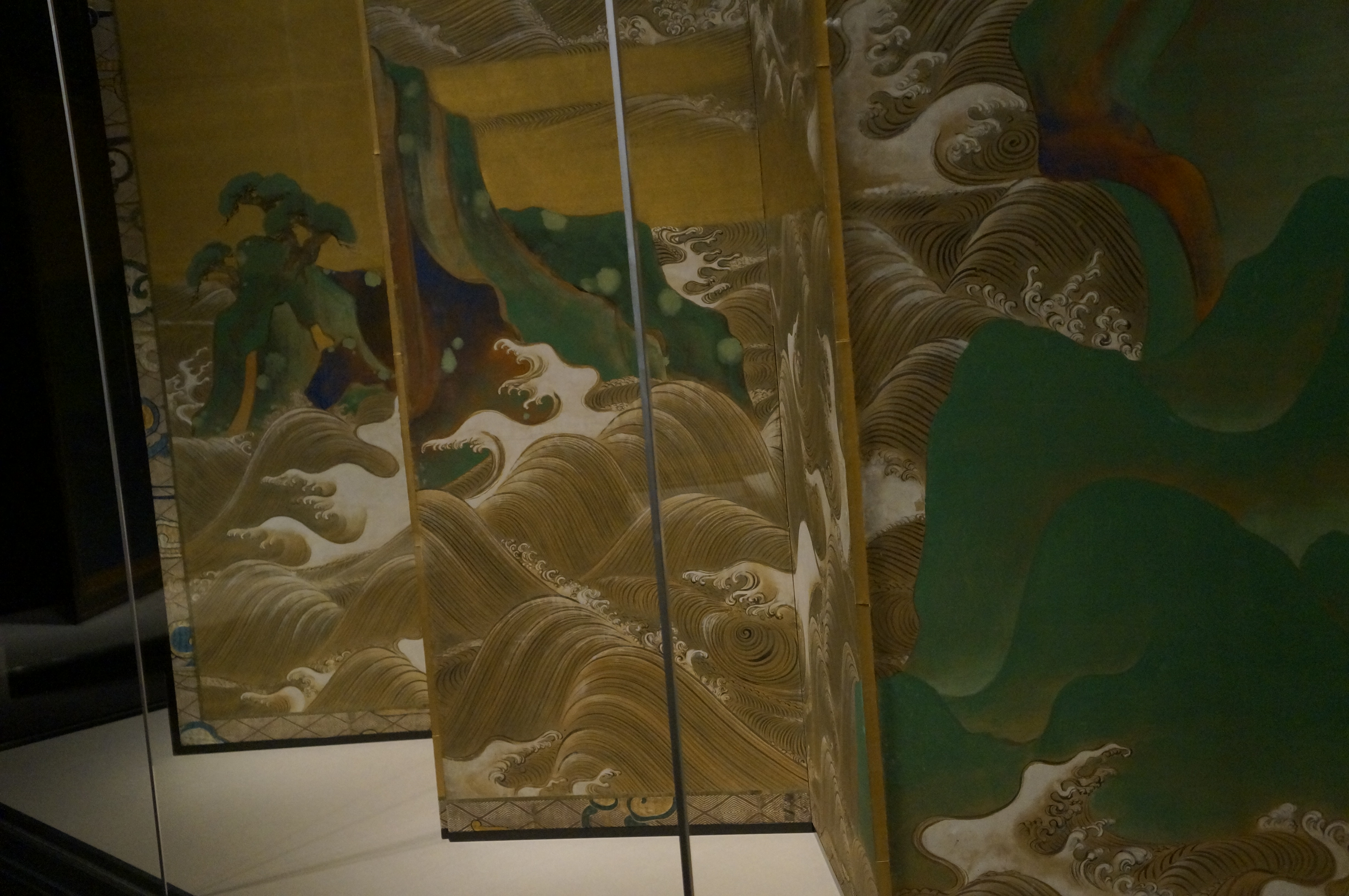
The "Waves at Matsushima" by Tarawaya Sotatsu , 1620s

The “Waves at Matsushima” by Tarawaya Sotatsu , 1620s

The opening screen of the Sackler show is “Waves at Matsushima.” It was “likely created” in 1620, said Ulak. Originally called “Boiling waters and rocks,” it was created for a rich merchant who donated it to a Zen temple.

In 1901, likely needing cash because of new taxation, the temple sold the screen to a Japanese dealer who sold it to Charles Lang Freer in 1906. (The screen comes from the neighboring Freer Gallery of Art’s own collection.)

The first floor of the exhibit has hand-created books, Noh (Japanese theater)  librettos, ink stamps and calligraphy with his noted collaborator Honami Koetsu. There are hanging scrolls, hand scrolls, and poetry.

One pair of scrolls are from a multi-print set that are “all dated to the 11th day of the 11th month of the 11th year (1606)” when a Imperial Regent (the Prime Minister) retired. “Probably these were created in his honor,” said Ulak.

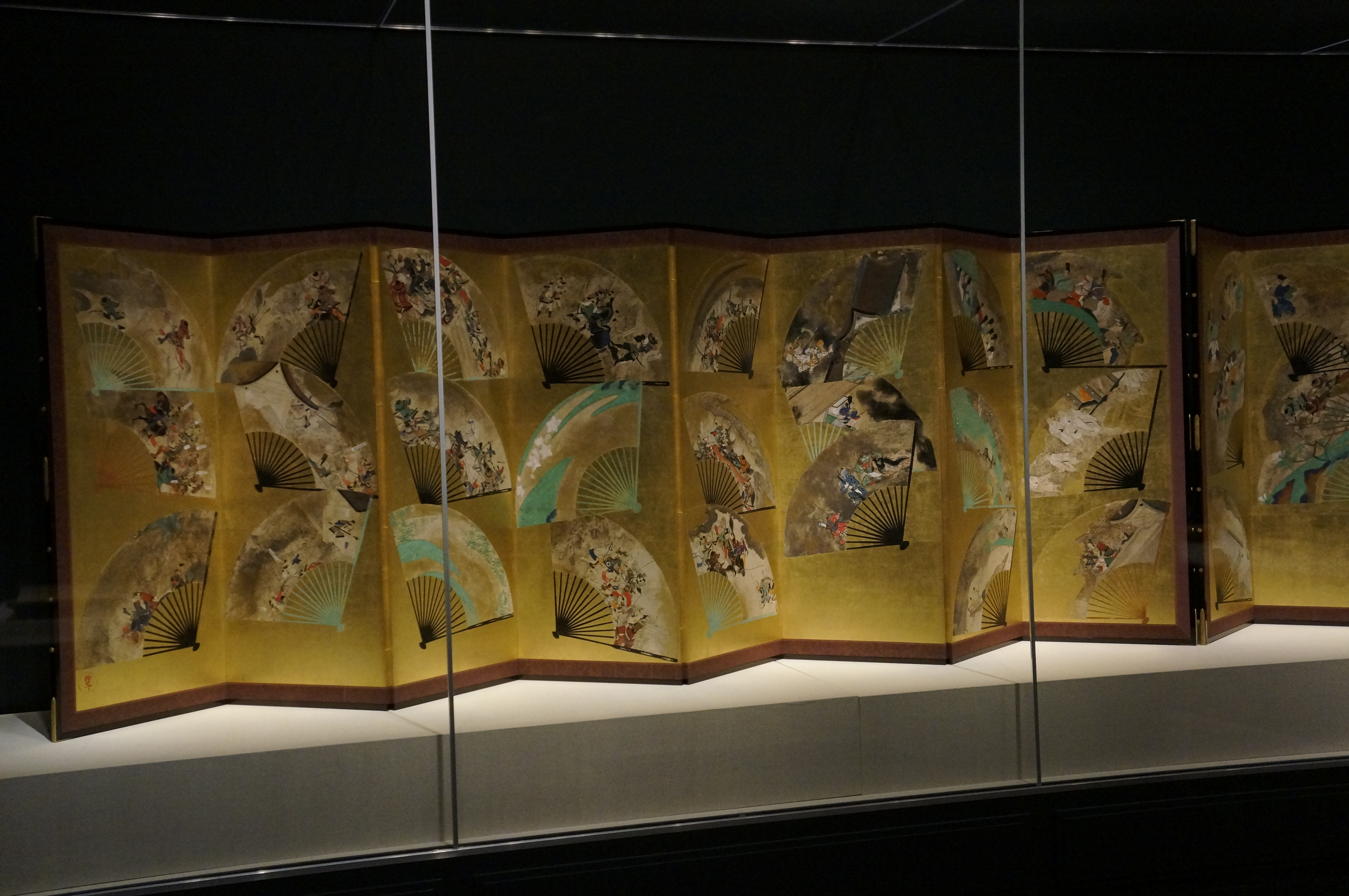
Among the many treasures, besides the opening “Making Waves” screen, is a  six-panel folding screen which was commissioned by the Emperor called “Screen with Scattered Fans.” It is on loan from the Imperial Household in Tokyo.

Why is it so very important? All the fans.

The "Screen with Fans" by Tarawaya Sotatsu

The “Screen with Fans” by Tarawaya Sotatsu

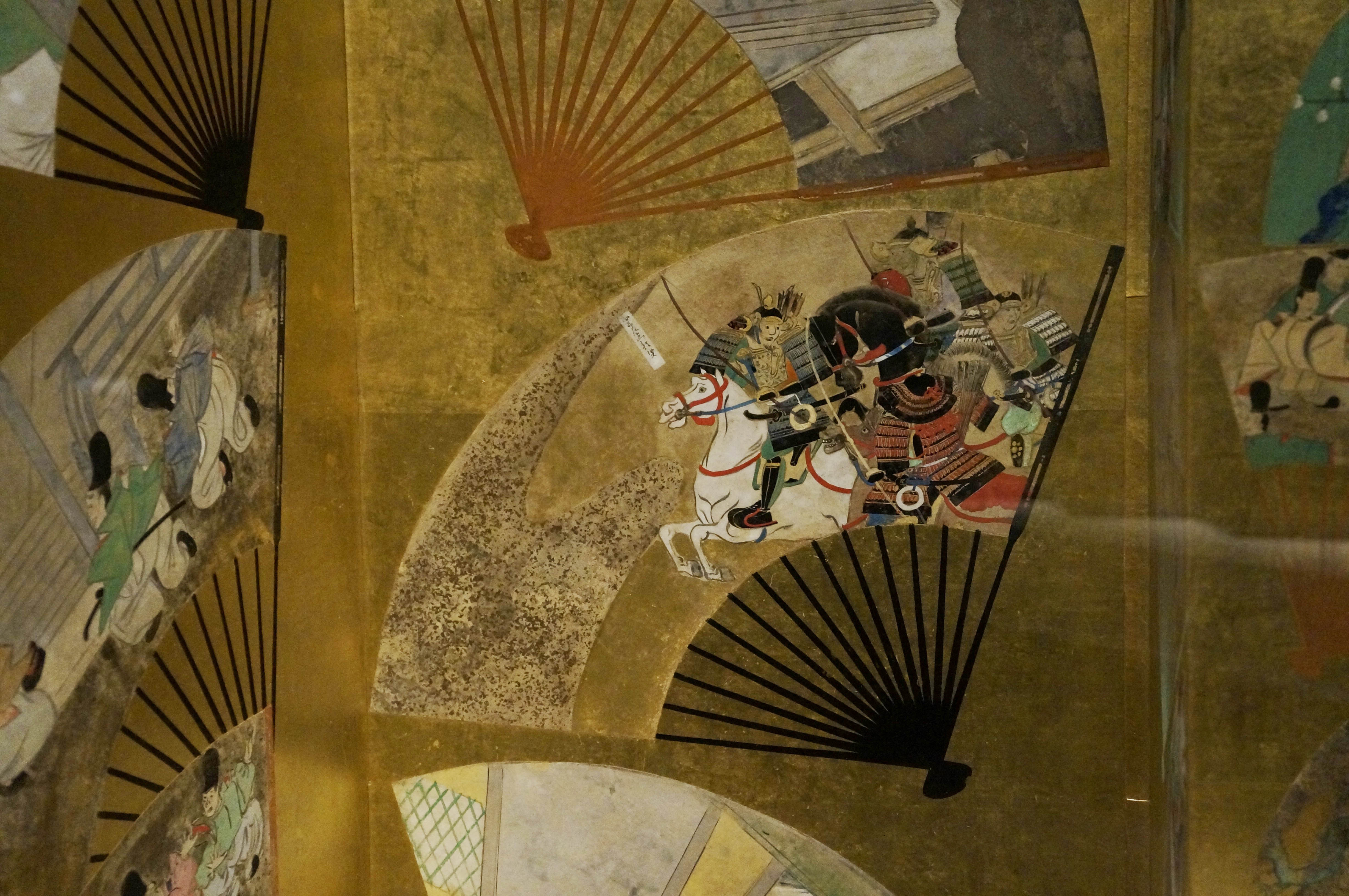
“Each fan has an illustration on it,” says Ulak, “and each of those illustrations is a quote. It’s a quote from a larger body of work of which there is only one of a kind – a hand scroll created in the twelfth century, a painting created in the 14th century, that no one but the aristocrats held.”

“Sotatsu has to have access to (the fans),” said Ulak, “And he and his collaborators take snippets and put these things throughout.”

_DSC0763

The “Screen with Fans” by Tarawaya Sotatsu

The “snippets” include “actual quotations” from the “Kamakura period (1185–1333,) and earlier.”

Thus the screens gather together centuries of history that were owned  by the aristocracy and made available for the Emperor’s enjoyment. Now five hundred years later, anyone who visits the Sackler exhibit can enjoy them.

The lower level of the exhibit is separated into several different collections. The first few are ink paintings done by Sotatsu and his workshop, including the magnificent monochromatic painting of a dragon dodging in and out of the clouds is part of the Freer Gallery of Art’s own collection.

Then comes a section of art inspired by Sotatsu.

Sotatsu’s workshop kept producing works in his style as shown in several hanging scrolls and floral screens. Artists through the 1800s continued to be inspired by his work.

And this is where you find the cats. A two panel screen “Whose Sleeves?” has four cats. One of them is playing with dice.

Cats from the screen "Whose Sleeves?"

Cats from the screen “Whose Sleeves?”

2015-Freer-cats2

Cats from the screen “Whose Sleeves?”


At the staircase between the upper and lower galleries, the Sackler has also provided a table where visiting children and adults can make their own fans.

The final room has a fascinating new initiative for spreading art to those who can’t get to Washington. Through a collaboration between Canon Camera and the Kyoto Cultural Association, “one-of-a-kind facsimiles” of the Freer Gallery’s art are being made and “used in a variety of schools and education in Japan,” said Ulak.

The kickoff piece?  Tarawaya Sotatsu’s “Waves at Matsushima.”


“Sotatsu: Waves at Matsushima”, Oct. 24-Jan. 31, 2016. The Arthur M. Sackler Museum, Washington D.C.

The Sackler’s Youtube video for Sotatsu:Making Waves

Amazon.com link for Sotatsu by James Ulak. 

Posted in History, Uncategorized | Tagged , , , , , | Leave a comment

Real life Victorian mystery match for any Conan Doyle story

Want a book with elements of “Bleak House,” “Ripper Street” and “Downton Abbey?” Try “The Dead Duke, the Secret Wife and the Missing Corpse” by Piu Marie Eatwell.

At the base, it’s about paternity, inheritance and loneliness. But when you mix in the law, emigration and scams, and you have a really rich story to enjoy on cool winter evenings.

Dead Duke

In 1898 a woman named Anna Marie Druce claimed that the reclusive eccentric 5th Duke of Portland had carried on a secret life from 1834-1864 as her husband, Thomas C. Druce, a noted businessman. Her son, Walter, was the first legitimate son of Druce (there were several illegitimate offspring) and, if Druce had been Portland, Anna wanted Walter to have the aristocratic name – and millions of pounds of income.

However, after the 5th Duke’s death in 1879, a relative, William Cavendish-Bentinck, had inherited the title as the 6th Duke. He was not eager to give up his inheritance and set out to refute Anna’s claims.

Thus began a series of legal wrangling, chronicalized in legal and police documents, famous previous murder cases, photographs and sensational penny press articles, that rocked a decade. Anna was only of the first to claim relationships with the Portlands.

Along the way, Eatwell gives a vivid and oft-unflattering view of Victorian/Edwardian society. This is not the well-ordered world of Sherlock Holmes; it’s more the grim, brutal and lonely world of the BBC’s “Ripper Street” with its dirt scrabble life of the lower middle-class and the poor house.

She does a brilliant job keeping the tension up while telling this story. She spent considerable time researching the family through the University of Nottingham library where “a combination of bequests, auction sales and transfers in lieu of death duties, the vast bulk of the archives of the Dukes of Portland… had ended up”.

First published in the UK in 2014, it has been updated with newly discovered information.  She has included a bibliography, list of persons and my biggest quibble with it is the clumsy cover design.

Posted in Uncategorized | Leave a comment

Sept 11, 2015 – Sept 11, 2001

2015-911-3

At dawn on September 11, 2015
Around the Washington Monument
Flags wave at half-staff in the warming air
Joggers run and stretch
And the buses go by wishing everyone a “Good Day”

September 11, 2001 was a beautiful day
A cool edging-towards-warm day with overtones of chill fall
The flags flew at the tops of their poles
The tourists walked over the grass to the museums
The homeless slept on grates where Metro’s heat kept them warm

Then came the World Trade Center attack.
Then an attack at the Pentagon.
Then a plane was crashed in a meadow in Pennsylvania

Washington writhed and emptied, first out the buildings, then onto the streets.
Babies in cribs enjoyed a trip outdoors not knowing why;
The governments’ daycares had closed
Soldiers on the streets with weapons, watching the frightened tourists trying to leave
The airports closed, the airplanes were grounded
At the end of the day, the sun shone with a reddish tint over a silent fearful city

It’s another beautiful September day in Washington

We don’t forget

We are ready now for what might come

***********

I wrote a story in 2011,  the 10th anniversary of 9/11 on changes in architecture because of terrorism attacks.

Also, in 2009, I was at Disney’s D23 convention and asked people if they remembered there at the happiest place in the world. Here’s the video


Posted in Uncategorized | Leave a comment

American commerce was alive and well at Dragon Con

Ignore the ups and downs of the Dow; the American consumer will shell out for luxuries if they can have it ‘their way.’

2015-DragonCon-geekchic

Vendor “Geek Chic: Furniture for Geeks” at Dragon Con

I was recently asked how the American economy was going. I can say, that as of Labor Day weekend, science fiction/media/anime/art/gaming/fantasy fans have few qualms about spending lots of cash and credit on what they love.

After going through the two vast floors of vendors room at Dragon Con, I would also say business and business competition is thriving for the fannish demographic.

And they want to shop. Tee shirts, buttons, posters, toys, books, and more, more, more.

Dragon Con is a very popular science-fiction and fantasy convention held over the Labor Day weekend in Atlanta Georgia. It runs for 4 days, is spread over five hotels, and unofficially overflows into many others. How many come? One media outlet said 60,000, another 65,000 visitors.

IMG_0712

Friday night at Dragon Con.

Con-goers enjoy the costume parade with fans dressed as characters from a cornucopia of media shows and movies such as “Arrow,” “The Walking Dead” (zombies anyone?) and the 501st Legion a “Star Wars” fan group, listen to panels with actors, authors or fans, meet and make friends, party hearty, and enjoy their time away from the real world.


Which brings us to the subject of this  blog: the dealer’s room, or rather the Vendors room at Dragon Con.

The two-floor vendors room was probably the largest array of non-specific-to-a-fandom dealers I’ve ever seen in the decades I’ve gone to SF/Media/book conventions.

Dragon Con sells to the fashionable Steampunk fans, comic book fans, media television (the CW’s “Arrow” was very hot), elaborate jewelry, stage and day make-up, movie/TV posters, and much more.

It was one stop-shopping for even a casual fan to spend lots of their hard-earned, hard-saved money.
IMG_0736

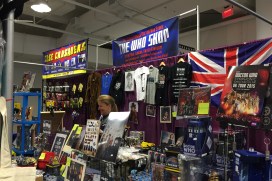
“The Who Shop” at Dragon Con

The long-broadcast British television show, “Doctor Who” was represented by  “The Who Shop” (get your Dalek salt and pepper shakers here) as well as other vendors.

The two times I visited the Atlanta Media Mart, it was absolutely packed with customers after that special gift, the one-of-a-kind toy, the dress that would make them fit in at the Renaissance Fair or the tee-shirt that lets you feel – for a moment – that you are Iron Man.

What struck me was the number of clothing vendors, their diversity, their offerings and their clientele.

Costuming for adults always increases in fall (Halloween?) but now with Renaissance Fairs and other outdoor parties, many fans keep multiple costumes in their closets. There is nothing inexpensive about any of this.

And, increasingly, fans are willing to pay a lot.

The competition for your $$$ was very lively and competitive. (Note: Visiting the dealers’ room for a corset was like scanning for the lowest price for gas to fill your tank. You have lots of vendors to select from.)

For example: If you wanted a simple corset, or a poet’s shirt, an expensive dress for a Victorian Steampunk outfit or just a necklace, you can find it at a reasonable price. If you’d prefer something more expensive, they will be happy to supply that.

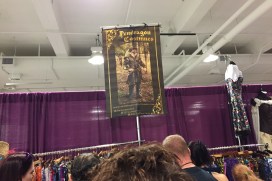
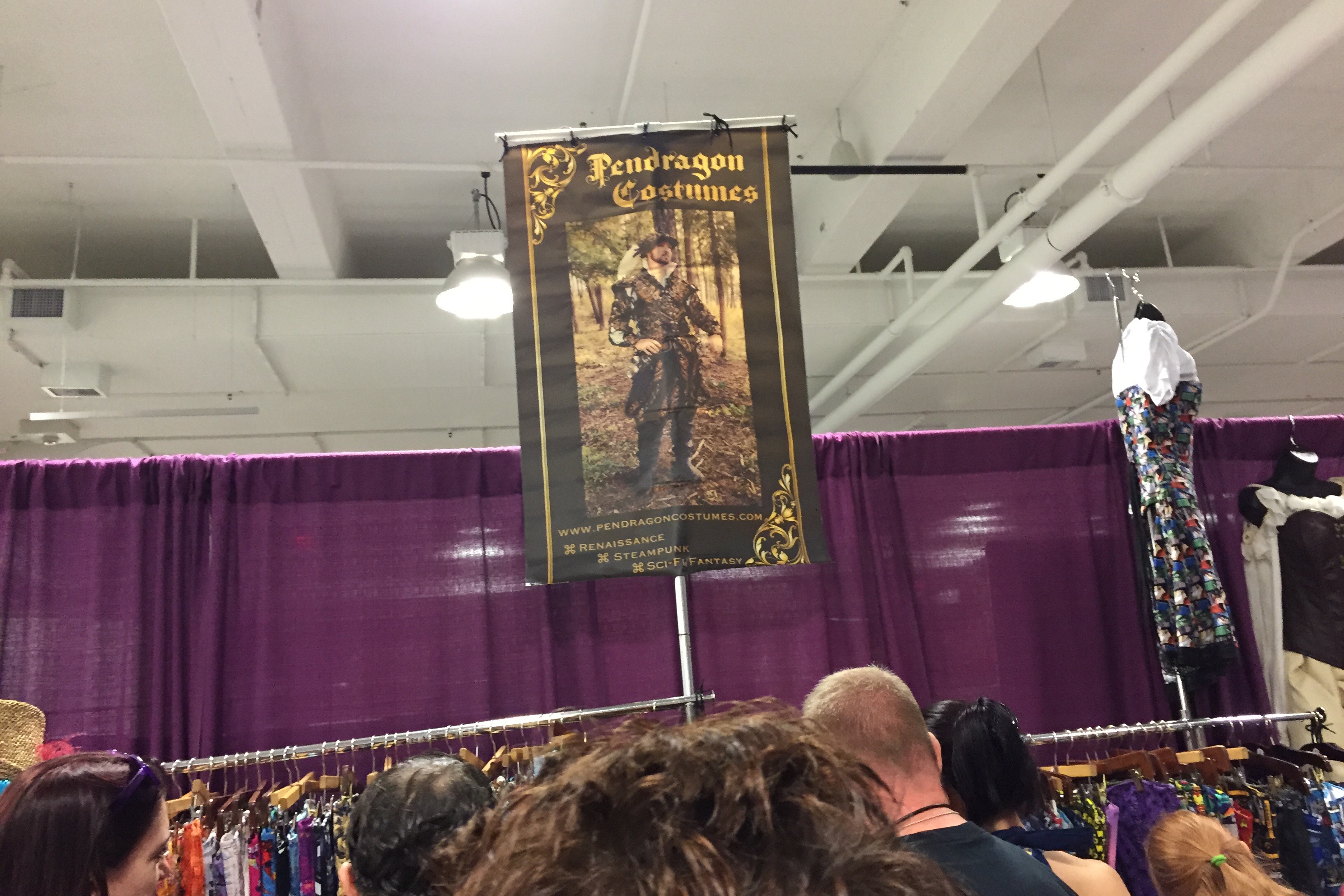
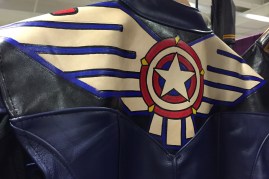
Pendragon Costumes out of California had a large display. I had never heard of them before I was literally stopped in my tracks by the beauty of a leather Captain American jacket.
IMG_0735

A leather “Captain America” jacket

Pendragon Costumes booth


The corset dress on the right is $230 on their website.  A consumer could try on and buy a dress, corset, cape there or make it a special order.

But what was noticeable is that they had several corset-and-leather selling competitors of equal quality in the building.

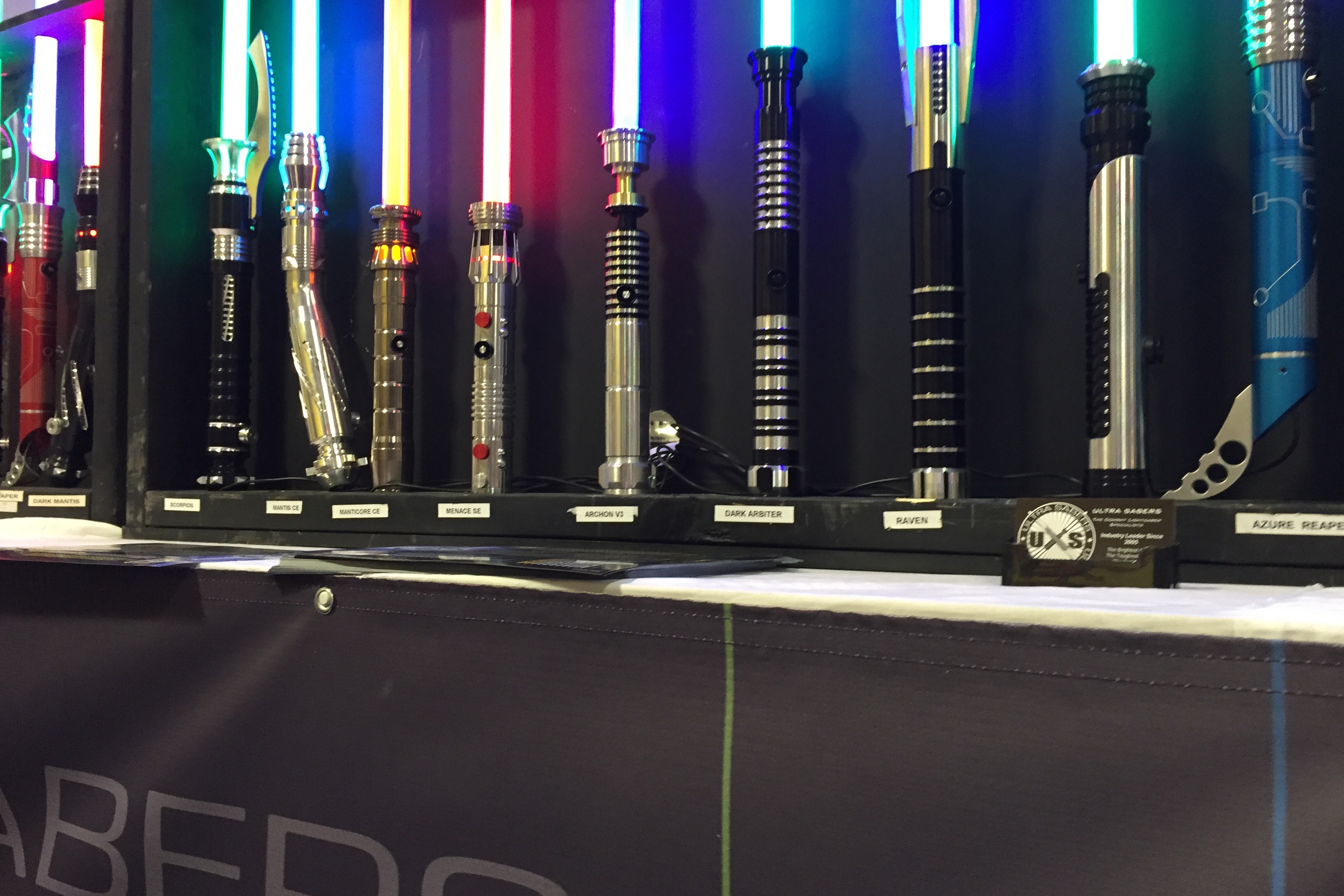
The other stand-out vendor was Ultra Sabers, the combat lightsaber specialists. Their booth was lined with their product – “Star Wars” sabers – and doing bustling business.

IMG_0729 IMG_0730

While Disney allows you (or your kids) to “make your own lightsaber,” these are lightsabers for the adult fan who knows he wants one.  Three-fourths of the customers were men when I passed. I’m sure women want them (heck, yeah!) but they weren’t the majority of patrons.

While this vendor didn’t have much competition on at the Mart, lightsabers are available elsewhere or online. Then again – wouldn’t you want your own personalized lightsaber to wave in the line at the upcoming  “Star Wars: The Force Awakens?”

While “Star Wars” Celebration in April 2015, took over the Anaheim convention center, its goals were clear-cut as to whom it was selling to, what was sold (material related to the Saga) and their future audience. I suspect that if the “Star Wars” #ForceFriday toy release had been a week earlier, it would have had a huge presence at Dragon Con.

The Internet has provided vast opportunities for sellers and buyers. If you didn’t make a choice at the convention, then you can order them over the Web.

So, is it time to shop for the holiday season yet? (Yes. There were hand-painted Christmas ornaments on sale as well.)
Posted in Uncategorized | Tagged , , , , , , , , | 1 Comment

Meet Genghis Khan in Philadelphia

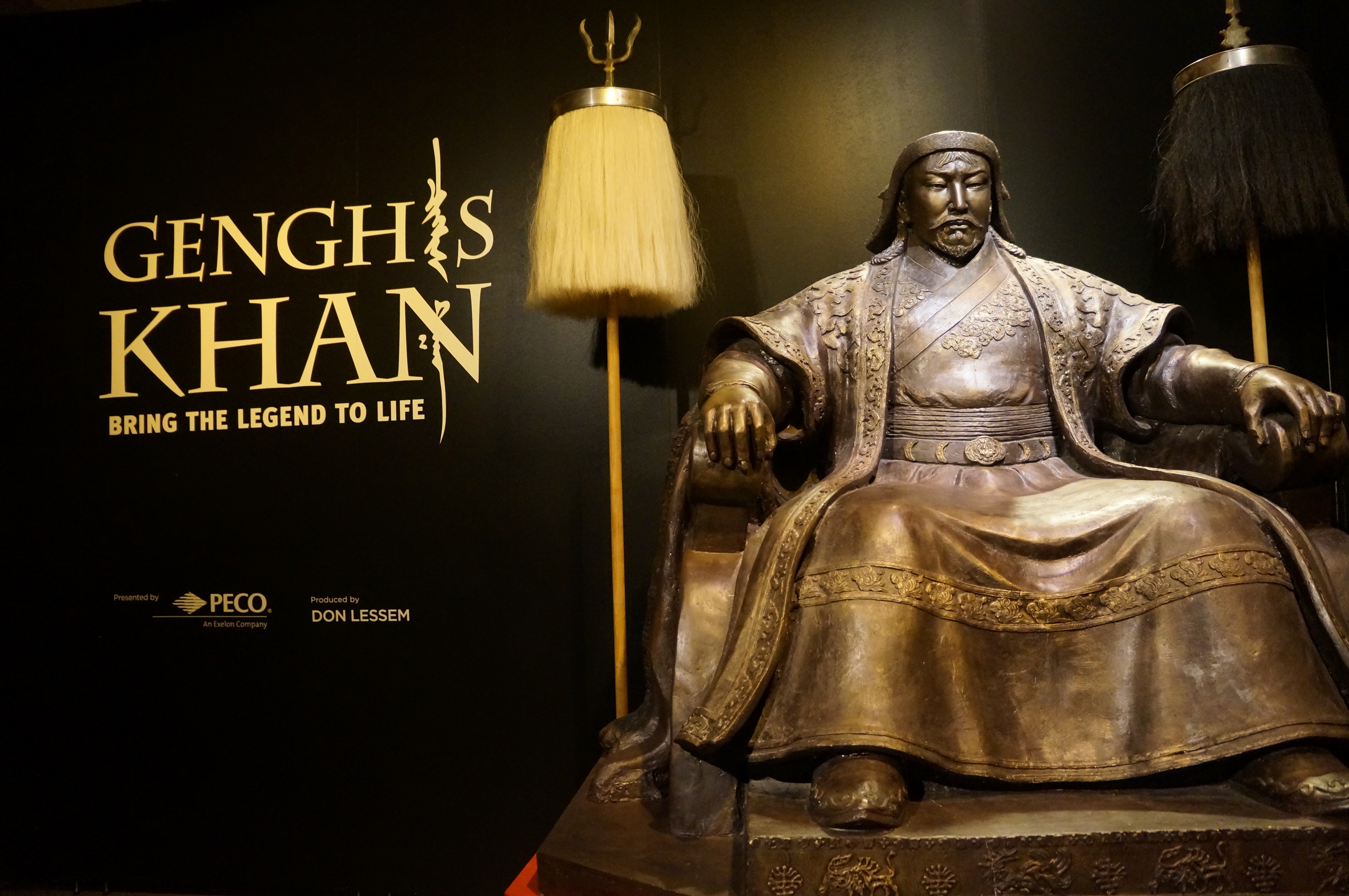
2015-Genghis-1In Philadelphia there is an underserved-but-deserving of attention exhibit at the Franklin Institute:

Genghis Khan: Bringing the Legend to Life

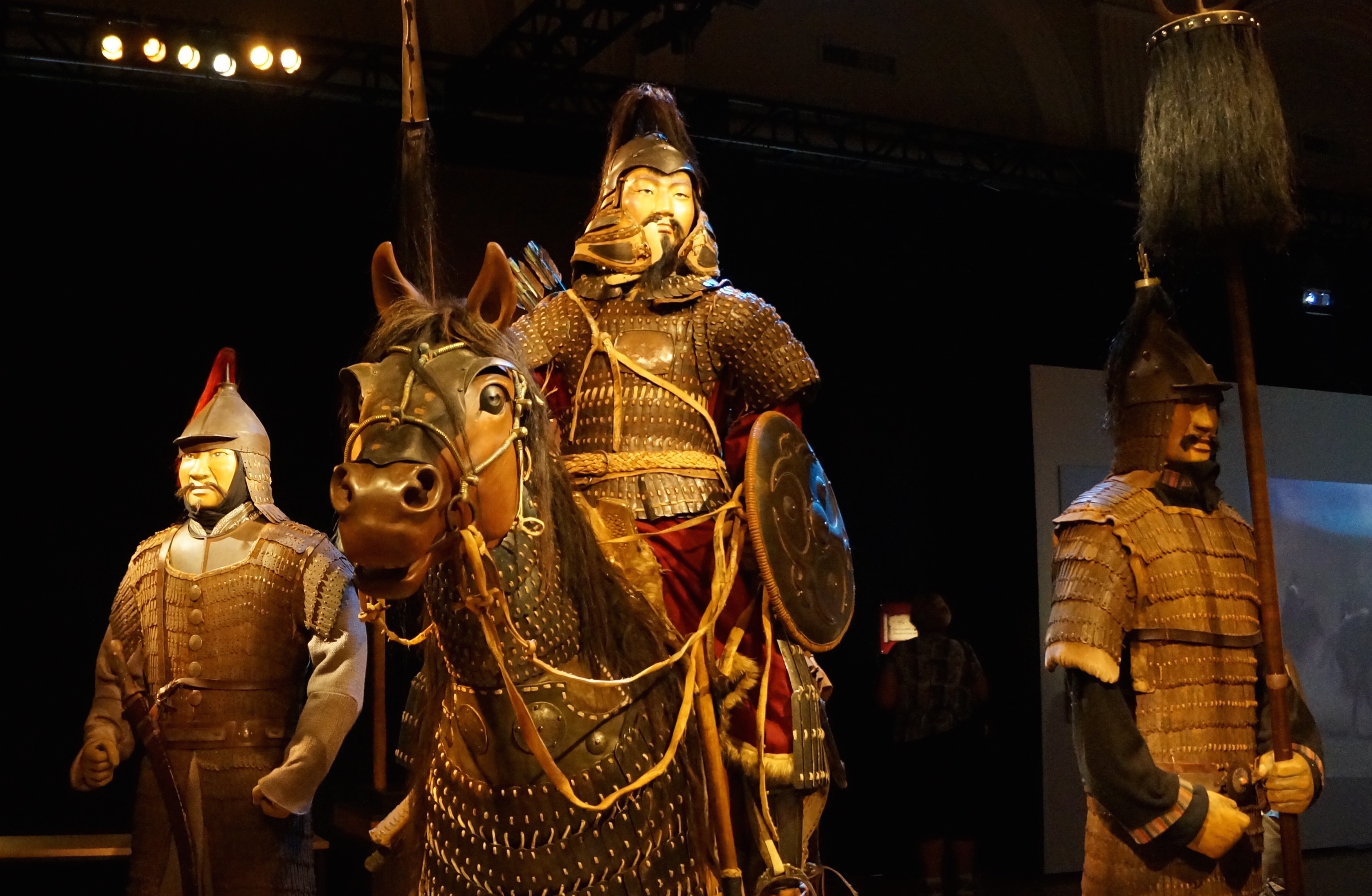
Temujin, known later as Genghis Khan or Chinggis,  came out of Mongolia to establish an empire and a dynasty. He was born to a minor tribal leader who was assassinated when Genghis was very young. His mother and other siblings were abandoned by the tribe leaving the future leader’s family to root for food in the fields and forests, and whatever Temujin.

Temujin never forgot what happened.

He unifies the nomadic tribes by conquering them, then offering the survivors  membership in his forces – “Obey me or Die” – and many chose to live and join which expand his armies. His armies are on horseback, each warrior having several horses, and  armed with the lethal bows as well as swords.

2015-Genghis-postcard

One of the very informational plaques points out that the Mongol arrows traveled farther than the English longbows (think Agincourt) or European crossbows. Add to this fact at the Mongols often fired from their galloping ponies, and you can see why they took over much of a continent.

Besides the plaques, the exhibit has excerpts from various films based on his life – mostly made in Asia. In the west, Hollywood’s 1956 film The Conquerer  starring John Wayne is probably the best known. (I watched it in a dive in Japan 30+ years ago while eating fried meat and rice. The film was in Japanese with English subtitles. The mind boggles.)

I digress.

Genghis himself dies at 65 having built the structure of his empire. His four (squabbling) sons, out of Daddy’s many wives, built out what he started.

Probably the best known is the grandson who went south into China and established the Yuan Dynasty. He became known as Kubla Khan and he was the leader when the Venetian Marco Polo traveled to China. Polo may have had one of these:

2015-Genghis-7-passport

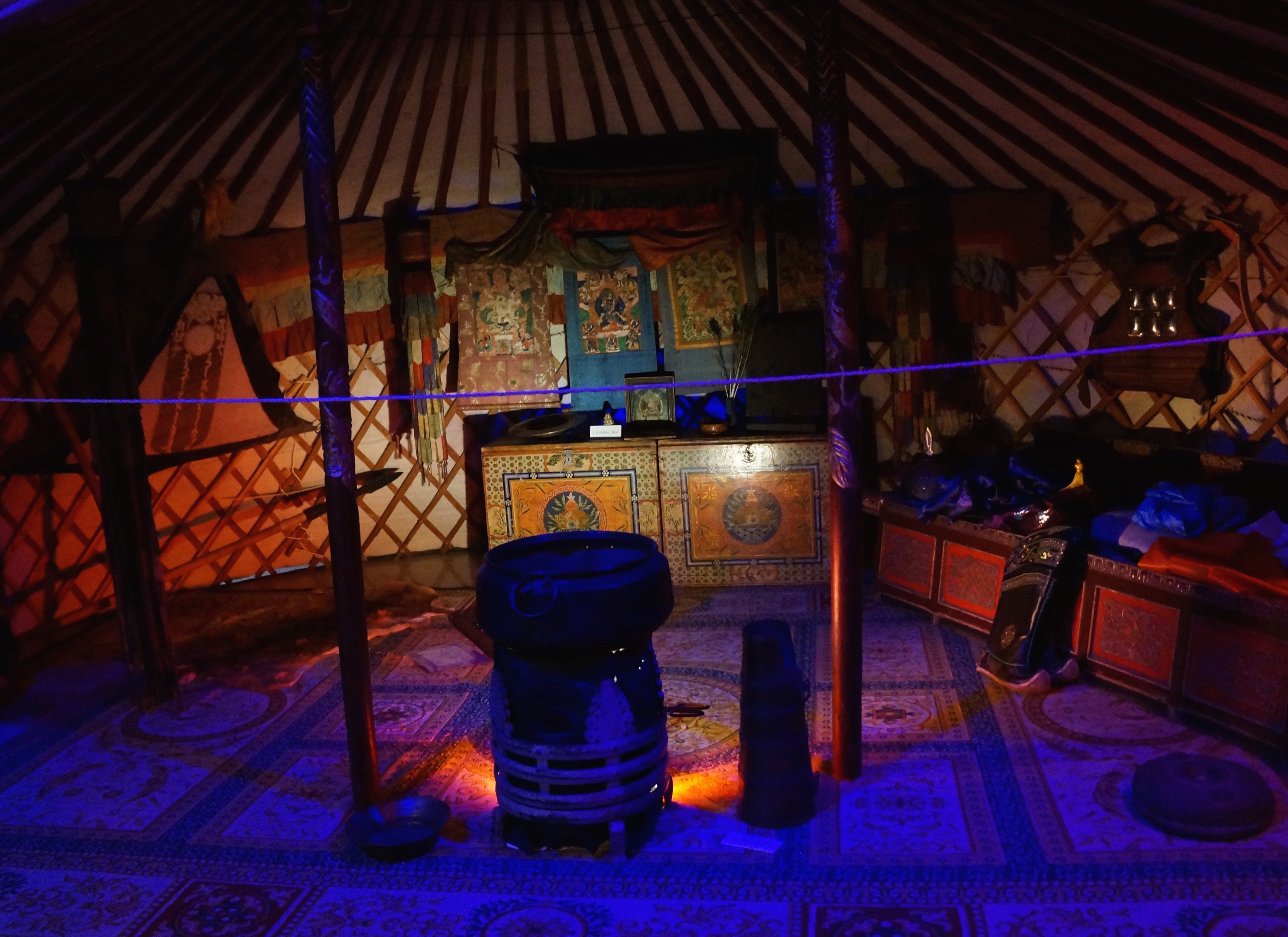
The exhibit has a reproduction of a traveling tent, a yurt, which looks quite comfortable (if you are a Khan.)

2015-Genghis-2

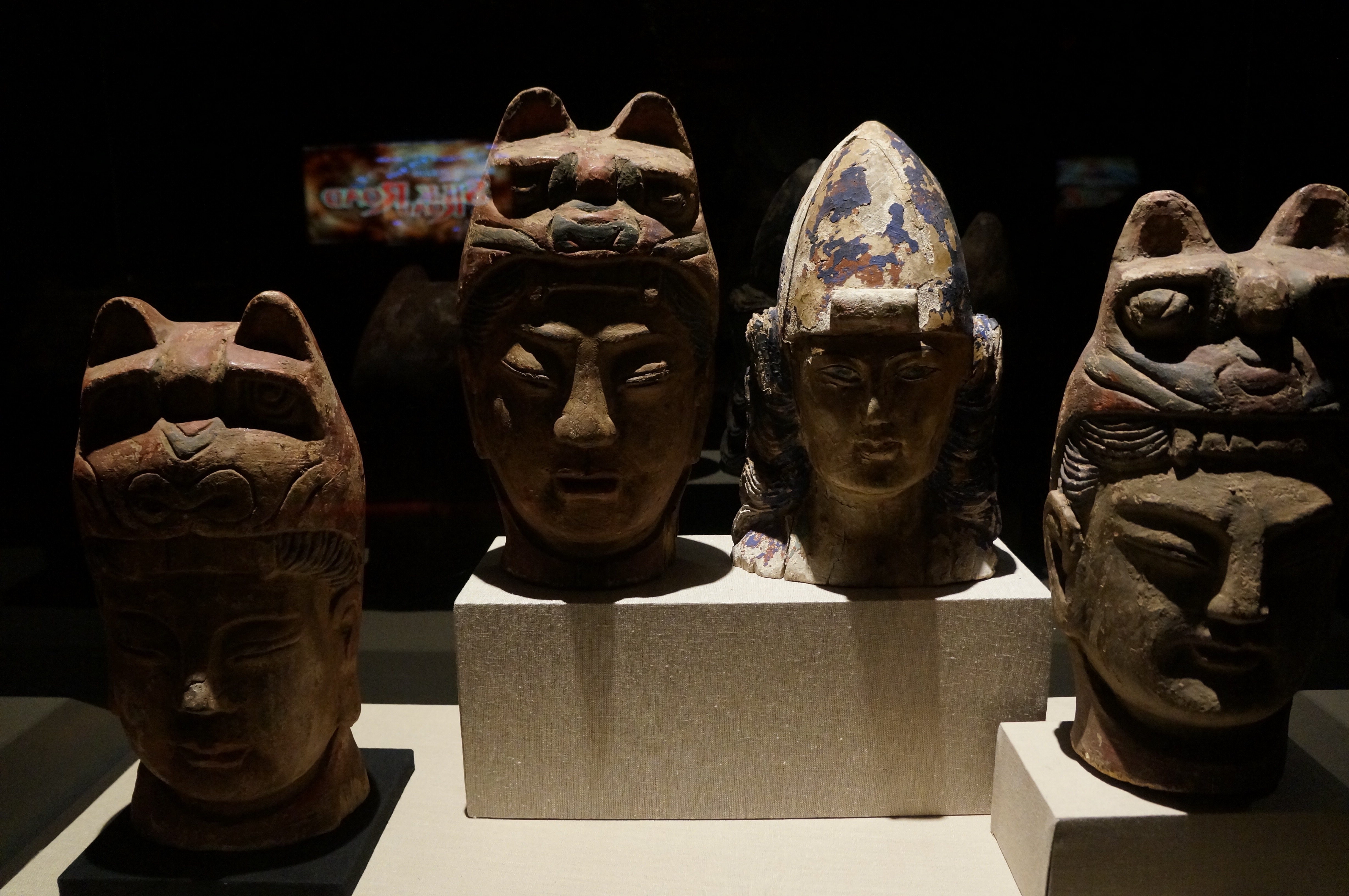
It has stone sculptures of the family (a couple with headdresses that look like Grumpy Cat.)

2015-Genghis-6

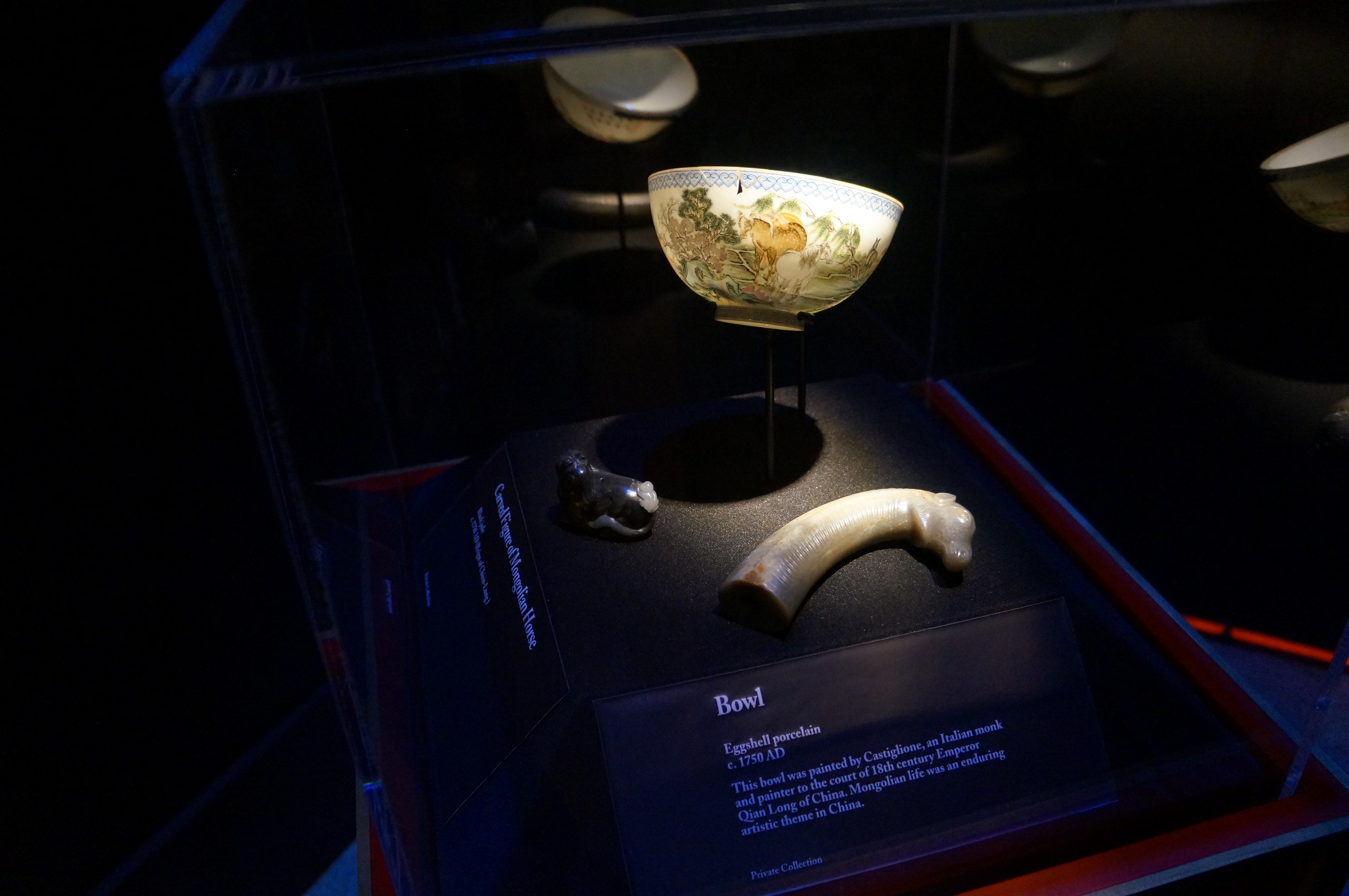
It has an exquisite rice bowl of eggshell porcelain painted by the Italian Jesuit painter Giuseppe Castiglione in the 1700s. As the caption says, the theme of the Mongolian life was a frequent topic even centuries after the fall of the Yuan dynasty in 1368.

2015-Genghis-5

What it doesn’t have is refrigerator magnets. The museum’s gift shop has various trinkets, a postcard and a tee shirt, but nothing that makes you whip out your wallet. The clerk says the magnets will come in shortly. (The exhibit’s been open for months, guys… I wonder if I can mail-order the magnet?)

The exhibit runs through January 6, 2016 and costs $29.95 for adults.  My final opinion? It’s really worth the effort. (Also, the cafeteria downstairs had wonderful sandwiches.)

2015-Genghis-3


Posted in Uncategorized | Tagged , , , , , , | Leave a comment

Visiting art museum collections without leaving home

What a wonderful world we live in when we can visit major art museums and see their collections from the comfort of our padded seats. The digitalization of their collections proceed apace. More and more museums are providing their collections online. This makes it a pleasure to browse.

For the sake of this post, let’s stick with the U.S. and the U.K.

Freer Gallery of Art For example, the entire collection at the Freer Gallery of Art will probably be available when they close in January 2016 for a year and a half’s renovation.

If  you can’t get to D.C.’s National Gallery of Art (which is not part of the Smithsonian), browse their art online.

The Bodleian Libraries at the University of Oxford have just made several collections online as well. Their earlier digital collections are now part of Digital Bodleian.

Other British museums have joined in the trend. The Victoria and Albert Museum, The Tate Museum with “2,500 artworks by” Joseph Turner and the British Museum are now all searchable.

Finally they are now giving the world the ability to see one-of-a-kind works of art that will never ever be on display.

A Chinese book from 1633 with woodblock prints and calligraphy was just digitized by The University of Cambridge’s Digital Library. It had never been opened.

Now The Shi zhu chai she he pu  is open to the world… and it is exquisite.


UPDATE: The Rijksmuseum Digitizes & Make Free Online 210,000 works of art 

Posted in Uncategorized | Tagged , , , , , , , , | Leave a comment

Revisit The Golden Age of Illustration in Wilmington, Del.


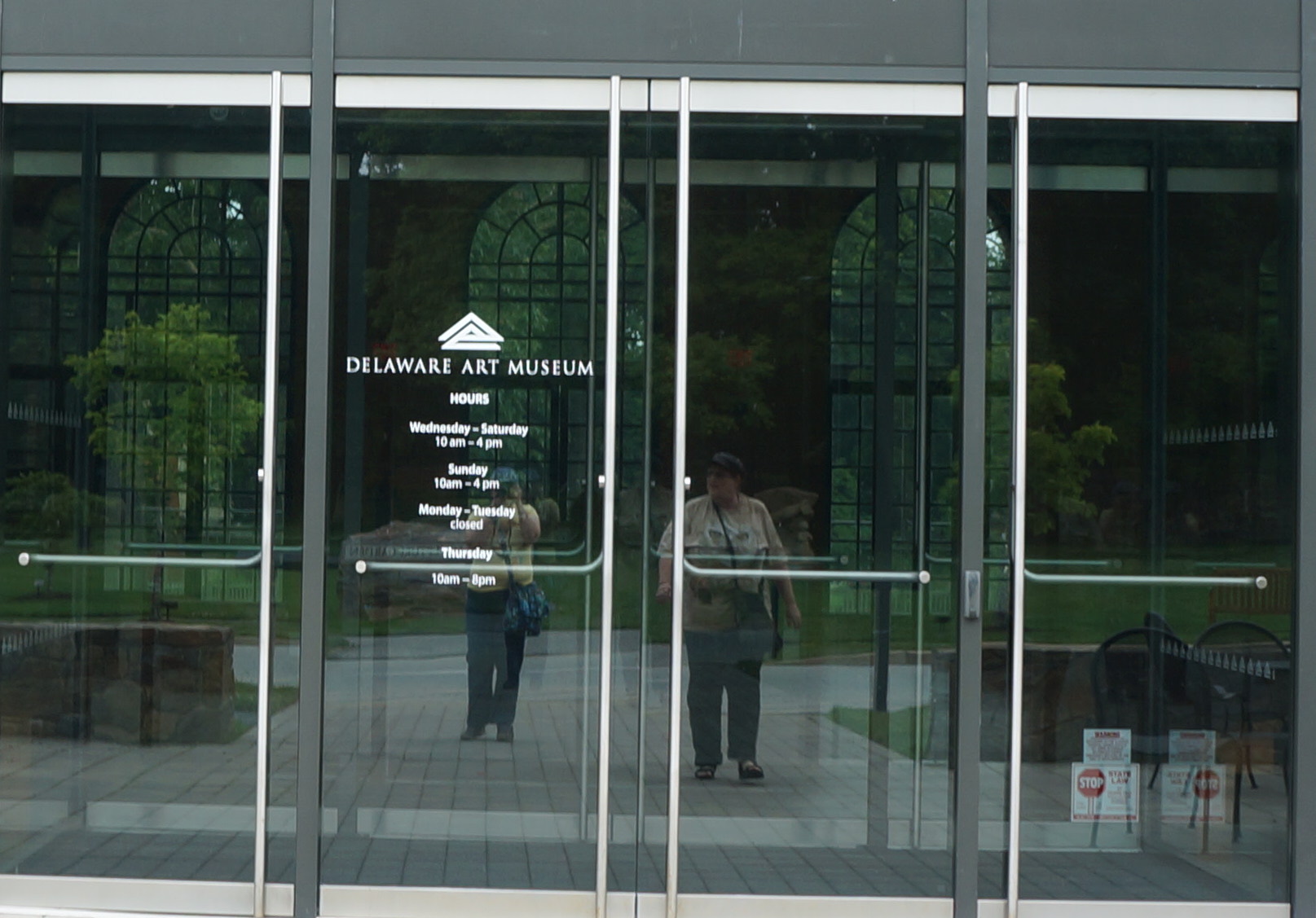
Delart-front door

There’s a hidden treasure in Wilmington, Delaware.

It’s a collection of nineteenth century and early 20th century original illustration paintings for books, newspapers and advertising at the Delaware Art Museum.

Sounds dull or esoteric? Not at all. This was the Golden Age of Illustration and here are some reasons for why you should visit the museum.

Did you see Disney’s “Pirates of the Caribbean?” Then you’ll enjoy the bedrock of the illustrations – the work of Howard Pyle. When creating work for the widely read Harper’s Monthly Magazine, he had to imagine what the pirates looked like, which created our modern image of piracy – see Buccaneers from 1905.

(By the way, many of these paintings are still under copyright, so I will link to the museum’s website and their online collection when possible)

Back to Pyle.  His work was influenced by the great artists that came before him – such as the Pre-Raphaelite Brotherhood (which are also on display), and influenced future generations to come.

Besides being a great illustrator, he was a great teacher. Many of his students’ work are included in the exhibit – including N.C. Wyeth and Frank Earle Schooner.

Notably, many were women such as Ethel Franklin Betts Bains whose “Birds and Rooftop with Apple Blossoms” is on display, and her sister Anna Whelan BettsKatharine Richardson Wireman who created paintings for Collier’s Weekly, Harper’s Bazar (spelled that way) and Cream of Wheat studied under him.

The now well-remembered Norman Rockwell who wrote in a 1927 letter to Ellen Bernard Thompson Pyle that her covers for the Saturday Evening Post were “dandy…and so full of color.”

Some paintings are for writers who are now little-known. An exquisite piece done in brown, cream, and black was done for a 1902 Jeannette Lee mystery for Scribner’s Magazineabout forged Albrecht Durer drawings titled “The day shall declare it.” Lucy Foster (Madison)‘s popular “Peggy Owen” series was set during the Revolutionary War.

There is nothing like seeing an original painting. There is beauty in the original, that often doesn’t come through in reproduction.

Besides the illustration exhibit, there’s also the “The Puzzling World of John Sloan.” Sloan’s decorative puzzles appeared in the Sunday newspapers supplements in the Philadelphia Press in the early 1900s. They show the influence of art nouveau and other modern art techniques. He also did other work for the newspapers.

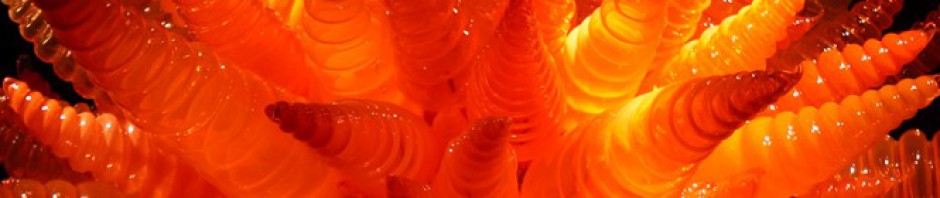
The museum has Chihuly glass hanging in the foyer and provides public tours on Saturday and Sunday.Delart-Chihuly-1


Delaware Art Museum, 2301 Kentmere Parkway, Wilmington, DE 19806. Phone: 302.571.9590, E-mail: info@delart.org. Blog” http://www.delart.org/blog/


Posted in Uncategorized | Leave a comment

Lazy Days of Summer at the National Zoo

On a warm summer’s day at the National Zoo in Washington D.C. there were only a few animals stirring. Most of them were human. But among the animal kingdom:

A clouded leopard yawned, then fell back to sleep.

2015-zoo-leopard-yawn

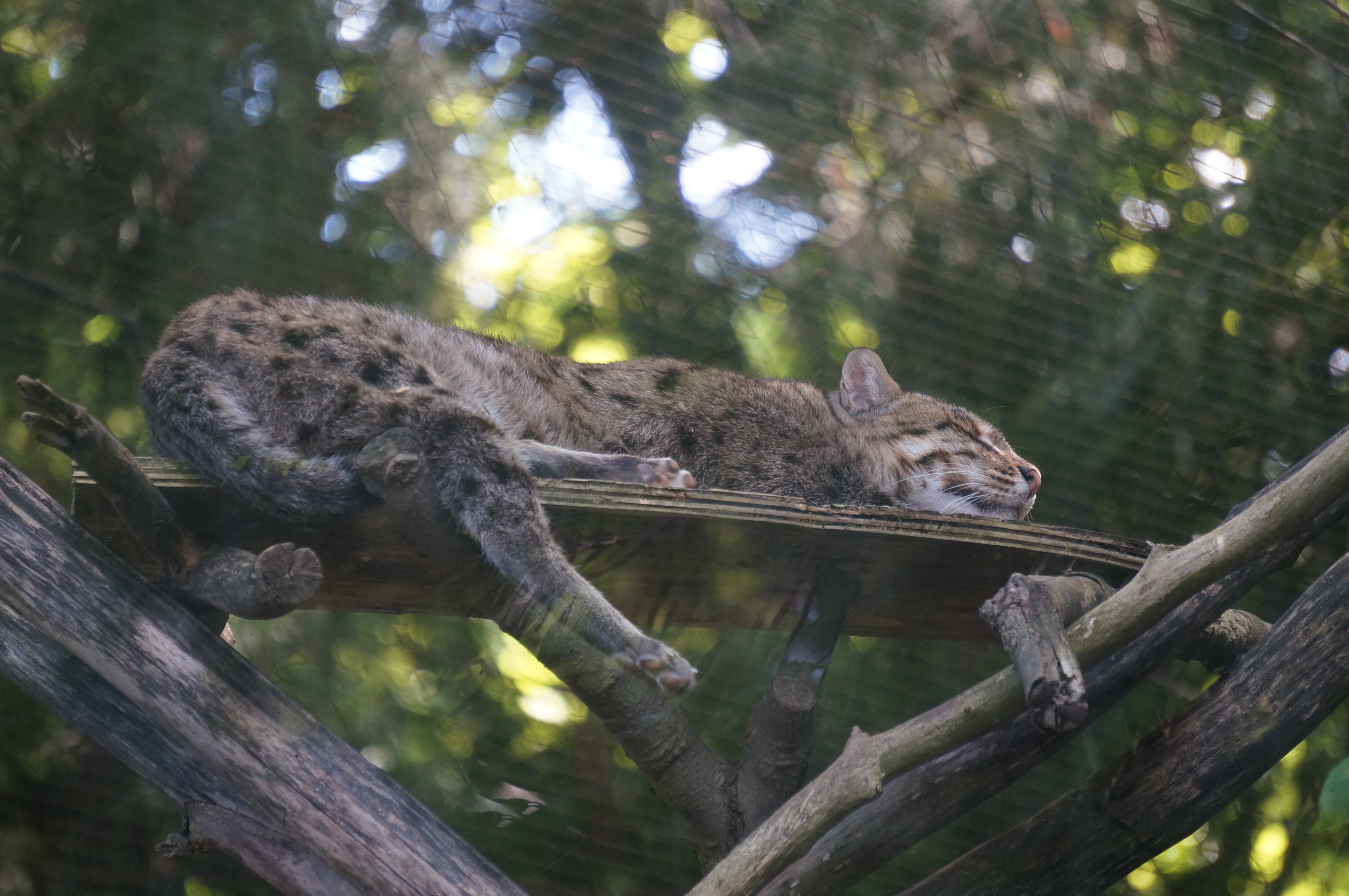
Nearby, a fish cat snoozed on its perch.

2015-zoo-snoozing-fishcat

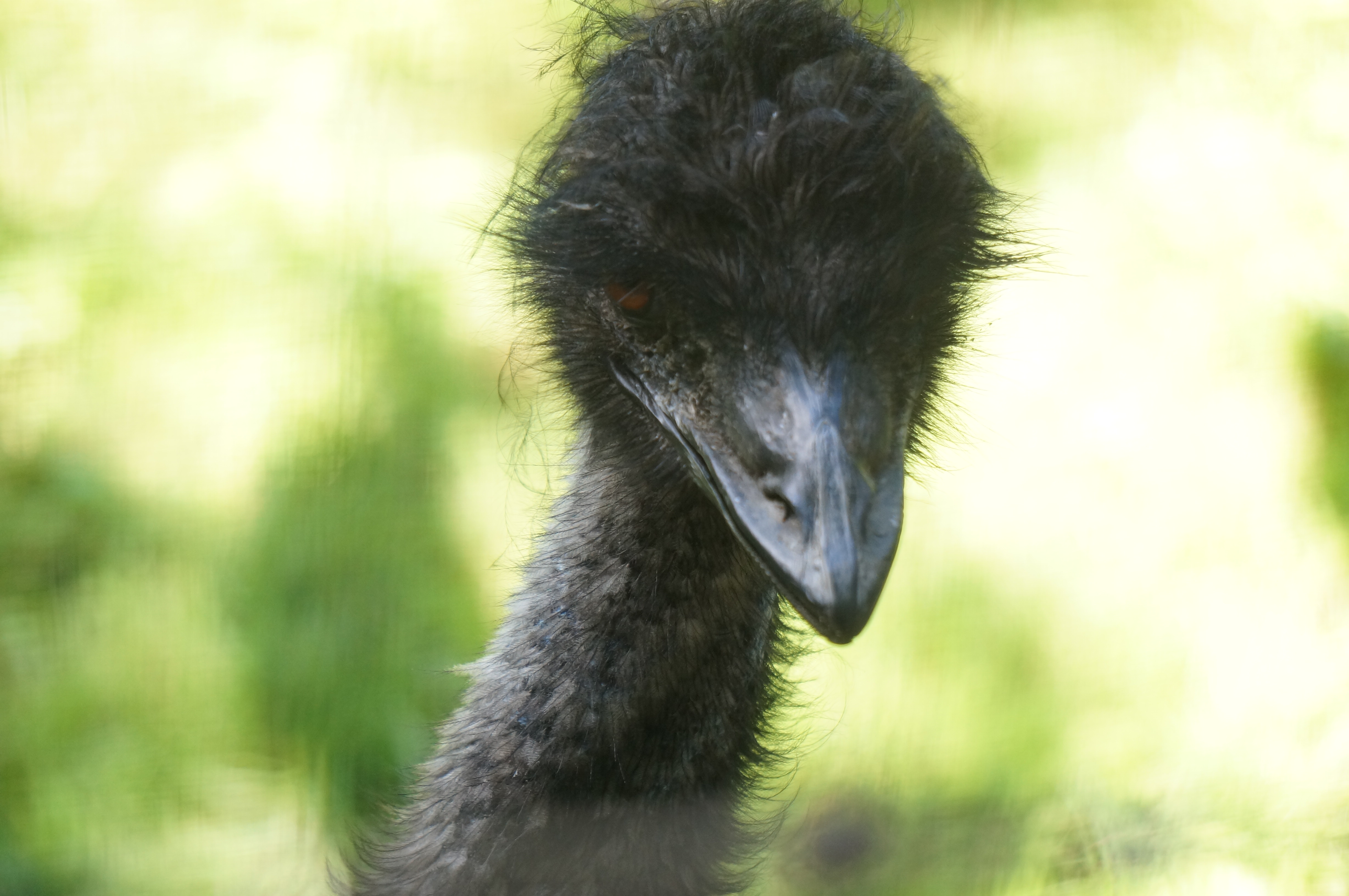
But the birds were more awake. The emu was inquisitive.

2015-zoo-inquisitive-emu  2015-zoo-emu-profile

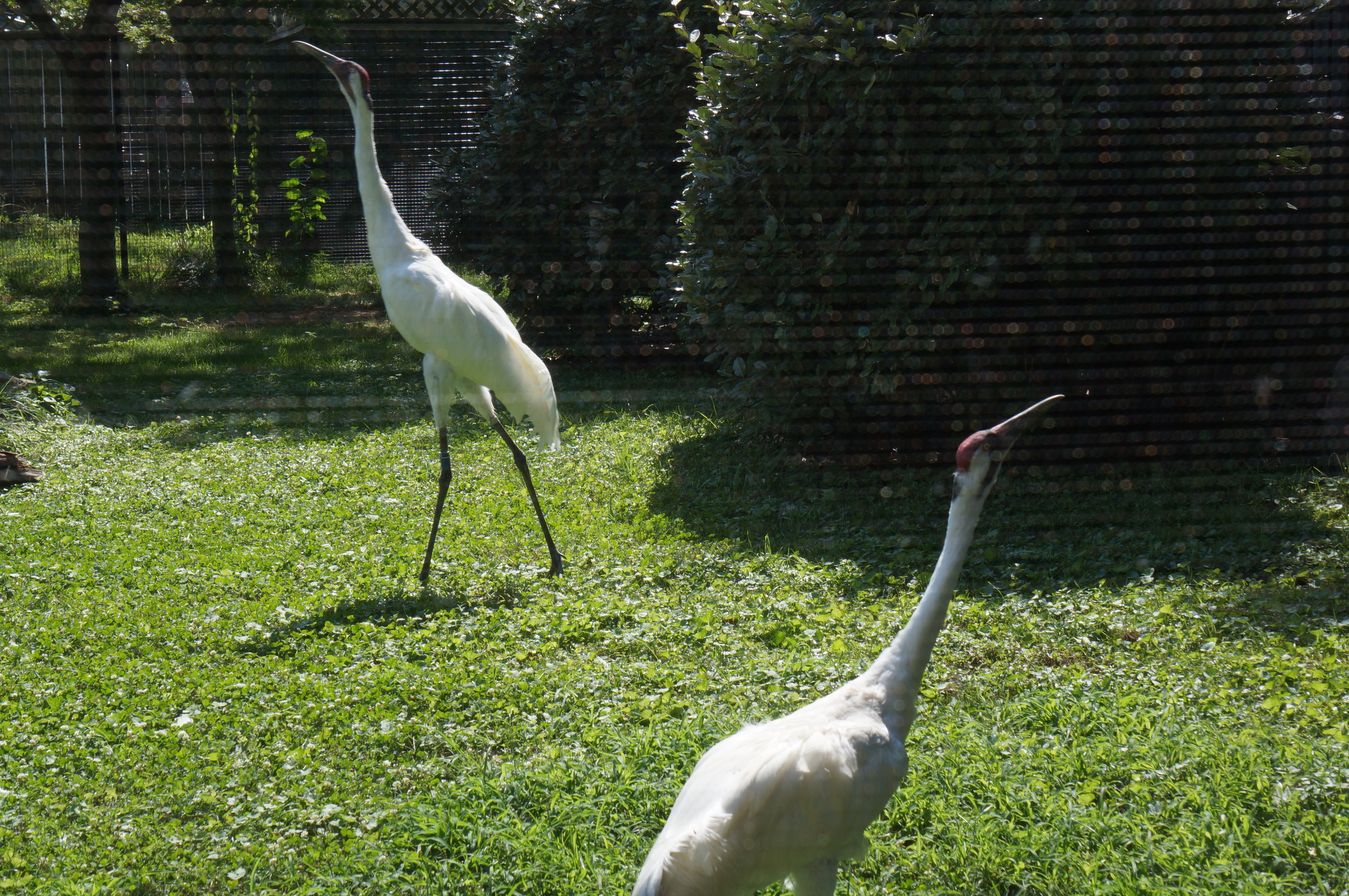
The white-naped cranes called one another

DSC09216

The flamingoes were out in force.

2015-zoo-flamingo-seibel 2015-zoo-flamingo-1

The Kori Bustard posed. The burrowing owl was looking for dinner.

DSC09207

DSC09223

The elephant was a huge hit. Suggestion: if  you want to visit the zoo, go at dusk or early in the day. Lesson learned. DSC09156


Posted in Uncategorized | Tagged , , , , , | Leave a comment